6 Reasons Your Homemade Salad Dressing Separates in the Fridge
Quick Answer: Most homemade dressing separates because oil and water-based ingredients (vinegar, citrus) naturally don’t stay combined without an emulsifier and enough mechanical mixing energy — cold temperatures in the fridge also slow the oil and thicken it, making separation more visually obvious even in dressings that were reasonably stable at room temperature.
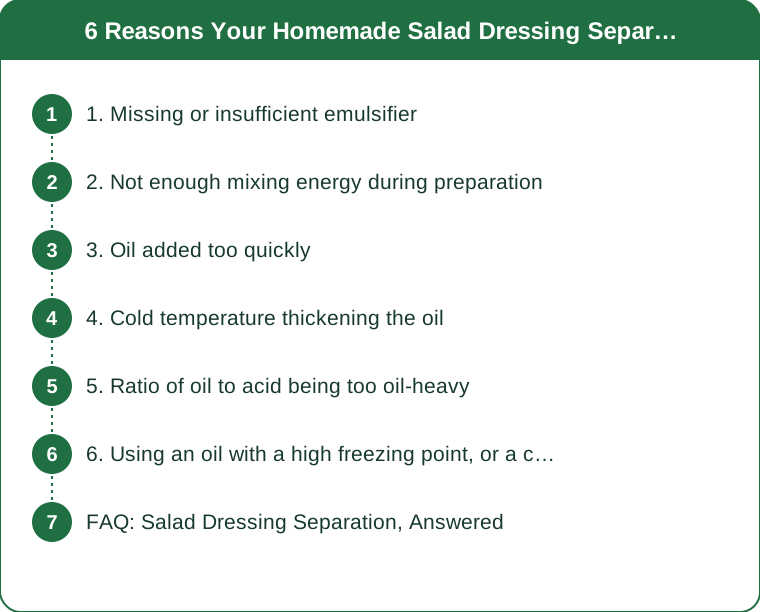
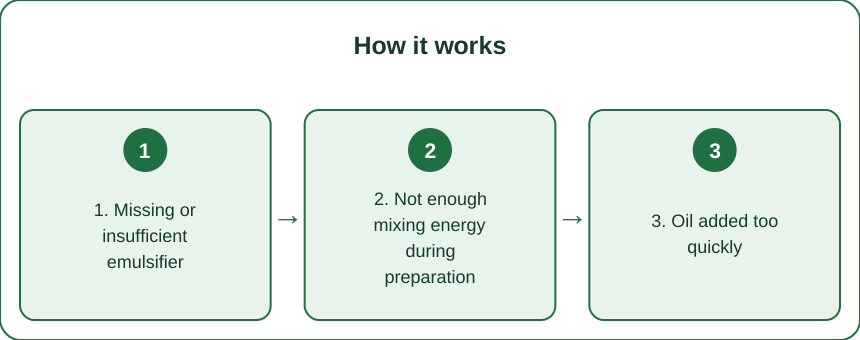
1. Missing or insufficient emulsifier
Mustard, egg yolk, or honey act as emulsifiers that help oil and vinegar bind together temporarily — a dressing made without any of these separates much faster than one with even a small amount added.
2. Not enough mixing energy during preparation
Whisking briefly isn’t enough to create a stable emulsion — a genuinely stable dressing needs sustained, vigorous whisking or blending, which physically breaks oil into smaller droplets that stay suspended longer.
3. Oil added too quickly
Pouring oil in all at once overwhelms the emulsifier’s capacity to bind it, while slowly streaming oil in while whisking continuously creates a much more stable mixture that resists separating in the fridge.
4. Cold temperature thickening the oil
Refrigeration causes oil to thicken and sometimes partially solidify, which visually looks like separation even when the emulsion itself hasn’t fully broken — this is why many dressings look separated cold but recombine easily once they warm slightly and get shaken.
5. Ratio of oil to acid being too oil-heavy
A very oil-heavy ratio (much more oil than vinegar or citrus) is inherently less stable, since there’s proportionally less emulsifier and acid to hold a larger volume of oil in suspension.
6. Using an oil with a high freezing point, or a container that resists remixing
Some oils (olive oil especially) solidify more at fridge temperatures than others (like avocado or grapeseed oil), making separation and clouding more visually pronounced for olive-oil-based dressings specifically. On top of that, a wide, shallow container makes it harder to fully re-shake and recombine settled layers compared to a tall, narrow jar, which allows more effective vigorous shaking to redistribute the ingredients.
FAQ: Salad Dressing Separation, Answered
Is separated dressing still safe to eat after a good shake?
Yes, generally — separation is a physical, not safety, issue as long as ingredients haven’t spoiled; a thorough re-shake typically restores it to usable consistency.
Does adding more mustard fix an already-separated dressing?
Often yes — whisking in a bit more mustard or another emulsifier into an already-made, separated dressing can meaningfully improve its stability going forward.
How long does homemade dressing typically stay good in the fridge?
Most oil-and-vinegar based dressings keep well for about a week refrigerated, though dressings with fresh dairy or egg should be used within a few days.
TL;DR:
- Separation is mostly about emulsifier amount, mixing technique, and cold-oil thickening
- Slowly streaming oil while whisking creates a far more stable emulsion
- Olive oil solidifies more in the fridge than some other oils, exaggerating the look
- A thorough shake usually fixes it — separation isn’t a safety issue on its own
Separated dressing is almost always a physics problem, not a spoiled-ingredient problem — a good shake and a better ratio next time usually solves it.
Keep Reading
This article is for general informational purposes only and is not medical advice. Always consult a qualified health professional for guidance specific to you.