7 Reasons Restaurant Salads Taste Nothing Like the One You Made at Home
Quick Answer: Restaurant salads taste noticeably better mainly because of salt seasoning at multiple stages, dressing applied and tossed properly rather than drizzled on top, and higher-fat, more assertive dressings than most home cooks use — none of which require restaurant equipment, just different technique.
Here are the seven biggest gaps, and how to close each one at home.

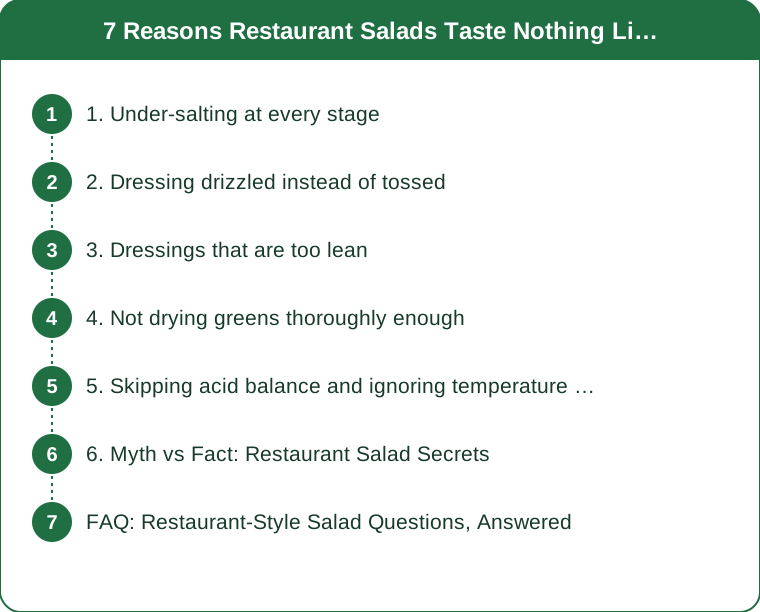
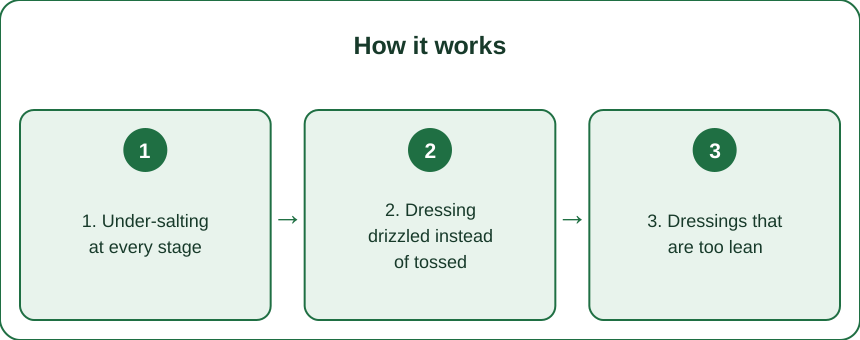
1. Under-salting at every stage
Restaurants season vegetables, proteins, and dressing separately, not just the finished dish. A salad salted only once, at the very end, tastes flatter than one where each component was seasoned along the way.
2. Dressing drizzled instead of tossed
Pouring dressing over a plated salad coats only the top layer. Tossing dressing through the greens in a separate bowl before plating distributes it evenly, which is a bigger flavor difference than the recipe itself.
3. Dressings that are too lean
Home dressings often skew light on oil to cut calories, but fat carries flavor and helps dressing cling to leaves — restaurant dressings are typically higher-fat than health-conscious home versions, which is a real part of why they taste richer.

4. Not drying greens thoroughly enough
Water left on washed greens dilutes dressing and prevents it from adhering. A thorough spin in a salad spinner, not just a quick shake, is a small step that makes a noticeable difference in how well dressing coats the leaves.
5. Skipping acid balance and ignoring temperature and timing
Restaurant dressings are usually balanced carefully between acid (vinegar or citrus) and fat, sometimes with a touch of sweetness. A home dressing that’s just oil and vinegar without tasting and adjusting often ends up either too sharp or too flat. On top of that, salads dressed too far ahead go soggy, and ingredients served cold from the fridge without adjustment taste muted — dressing at the last moment and letting refrigerated components come slightly toward room temperature both improve flavor perception.
6. Myth vs Fact: Restaurant Salad Secrets
Myth: restaurant salads taste better because of a secret ingredient. Fact: it’s almost always technique — seasoning at each stage, proper tossing, and dressing balance — not a hidden ingredient.
Myth: a lighter dressing is always the better choice. Fact: a slightly higher-fat dressing, used in a reasonable portion, often tastes far better and doesn’t necessarily add more calories than people drowning a salad in a ‘lighter’ version to compensate for blandness.
FAQ: Restaurant-Style Salad Questions, Answered
How much dressing is actually the right amount?
Enough to lightly coat every leaf without pooling at the bottom of the bowl — tossing thoroughly usually means less dressing is needed than a heavy drizzle.
Does the type of salt matter?
A flakier finishing salt at the end can make a noticeable difference versus fine table salt used only in the dressing, since it adds bursts of seasoning rather than uniform saltiness.
Is a salad spinner really necessary, or can a towel work?
A clean kitchen towel works in a pinch, but a spinner removes water more thoroughly and consistently, which matters more than it seems for how well dressing adheres.
TL;DR:
- Seasoning vegetables and proteins separately, not just the finished salad, closes much of the flavor gap
- Tossing dressing through the greens beats drizzling it over a plated salad
- A slightly higher-fat, well-balanced dressing tastes richer than a lean one, without needing more of it
- Drying greens thoroughly and dressing at the last moment both meaningfully improve the result
None of these fixes require restaurant equipment — just seasoning earlier, tossing properly, and not being afraid of a well-balanced dressing.
Keep Reading
This article is for general informational purposes only and is not medical advice. Always consult a qualified health professional for guidance specific to you.