7 Reasons Washed Greens Rot Faster Than Unwashed Ones
Quick Answer: Washing greens is fine - leaving water on them is not. Residual surface moisture lets bacteria multiply quickly, accelerates cell breakdown at cut edges, and turns the enclosed container into a humid chamber. Greens dried thoroughly and stored with a moisture absorber last as long as or longer than unwashed ones. The failure is drying, storage, and container choice - three fixable things. Wash if you want; dry like it matters.
Seven specific reasons, and the fix for each.

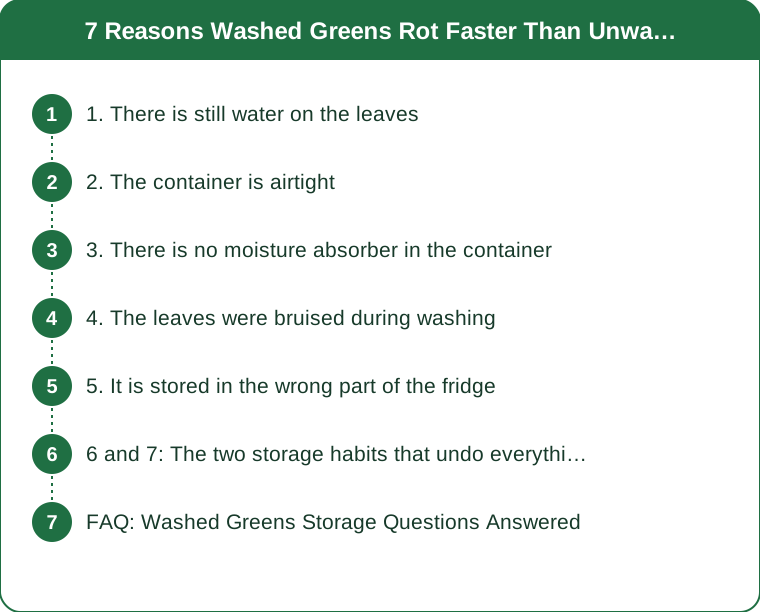
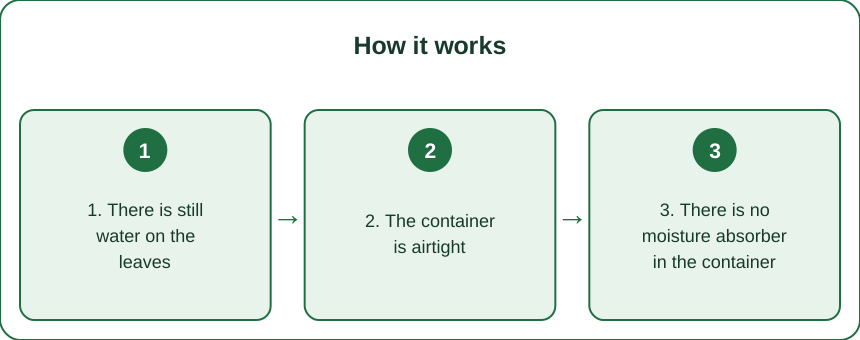
1. There is still water on the leaves
This is the main event and everything else is secondary. Surface water is what spoilage bacteria need to multiply, and a leaf that looks dry to the eye is usually still carrying a film of moisture in its folds and along the ribs.
A salad spinner removes far more water than shaking or patting. Two or three spins with the bowl emptied between them removes dramatically more than one long spin, because the water pools and gets reabsorbed.
Then let them air dry a few minutes. Spread on a clean towel for five to ten minutes after spinning removes the remainder. This step is skipped by nearly everyone and it is the one that decides the outcome.
Cold water is better than warm. Warm water speeds up the enzymatic processes that lead to browning and softening, and it also promotes wilting. Use cold, and do not soak longer than a couple of minutes.
Fix: spin, empty, spin again, then air dry on a towel. Three extra minutes buys three extra days.
2. The container is airtight
A completely sealed container traps the moisture the leaves continue to release. Greens respire after harvest, giving off water vapour and carbon dioxide, and a sealed box turns that into condensation on the lid that drips back onto the leaves.
You want restricted airflow, not zero airflow. A container with a small gap, a lid left slightly ajar, or a few holes lets excess vapour escape while keeping the leaves from drying out completely.
The bag greens come in is engineered for this. Commercial salad bags use films with specific gas permeability to maintain a modified atmosphere that slows respiration. That is why the unwashed bag outlasts your carefully sealed box.
Do not use a container far larger than the greens. Extra air space means more moisture-holding capacity and more movement, and leaves bruise as they slide around.
Fix: a container roughly the size of the greens, lid on but not sealed tight, with a paper towel inside.
3. There is no moisture absorber in the container
A paper towel in the container is the single cheapest improvement available. It absorbs the water the leaves release and holds it away from the leaf surfaces, which is precisely what prevents slime.
Line the bottom and lay one on top. Moisture collects on the lid and drips down, so the top towel matters as much as the bottom one.
Change it when it feels damp. A saturated towel is worse than none because it holds water in contact with the leaves. Check on day two and swap it.
A clean tea towel works as well and generates no waste. Same principle, reusable.
Fix: two paper towels per container, replaced when damp. This alone often doubles the useful life of washed greens.

4. The leaves were bruised during washing
Bruised cells leak, and leaked cell contents feed bacteria and trigger browning. Agitating leaves hard in a colander or packing them tightly in a spinner damages them, and the damage is invisible for a day or two.
Handle wet leaves less, not more. Wet leaves are more fragile than dry ones, and every extra transfer causes more damage.
Fill the spinner loosely. A packed spinner crushes the leaves at the outside of the basket and does not spin them dry anyway. Two smaller batches beat one large one.
Tear rather than cut where the recipe allows. A knife slices through cell walls cleanly and releases more of the enzymes that cause browning, while tearing separates along cell boundaries. The difference is real for lettuce, though modest.
Fix: gentle swirl in a bowl of cold water, lift the leaves out rather than pouring, spin in small batches.
5. It is stored in the wrong part of the fridge
Greens want cold, humid, and stable. The crisper drawer exists for this and it is where washed greens should live - not on a main shelf where the temperature swings every time the door opens.
Temperature swings cause condensation. Every warm-cold cycle deposits water on the leaves, which is the same problem as not drying them properly, repeated daily.
Keep them away from the back wall. The coldest spot in most fridges is at the back, and greens freeze and turn translucent and mushy at temperatures only slightly below the fridge average.
Store away from apples, bananas, and tomatoes. These produce ethylene gas, which accelerates ripening and decay in leafy greens. Most crisper drawers have a humidity slider - greens want high humidity, ethylene producers want low.
Fix: high-humidity crisper drawer, not against the back wall, away from ethylene producers.
6 and 7: The two storage habits that undo everything else
6. Different greens were washed and stored together
Sturdy and delicate greens have completely different lifespans, and mixing them means the whole container fails at the pace of the weakest one.
Spinach and spring mix are the fastest to go. Thin leaves with a high surface-to-volume ratio lose water fast and bruise easily - they may last three or four days washed, at best.
Romaine, kale, and cabbage are far more robust. Thicker cell walls and lower surface area mean a week or more with the same treatment.
One decaying leaf accelerates the others. Spoilage organisms spread by contact, so a single slimy leaf left in the container shortens everything around it. Pull it out the moment you see it.
Fix: store types separately, and check the container on day three. Thirty seconds of triage saves the rest.
7. You washed a week’s worth at once
Batch washing on Sunday is efficient and it starts the clock on everything simultaneously. Washed greens have a shorter ceiling than unwashed ones no matter what you do - you are trading longevity for convenience.
Wash in two batches instead. Half on Sunday, half on Wednesday gives you the convenience for the days you need it without pushing anything to day six.
Or wash only what needs it. Sealed bagged greens labelled as pre-washed do not benefit from re-washing in most cases, and re-washing them removes the protective packaging atmosphere and starts the decline.
Buy whole heads if you are storing longer. An intact head of romaine keeps far longer than any cut or washed product, because the cut surfaces are what fail. Cut what you need each day.
Fix: batch to three or four days, not seven - and keep one whole head as the backup for the end of the week.
And a seasonal note: as autumn arrives, sturdier greens come into their own. Kale, chard, cabbage, and late romaine all store dramatically better than summer’s tender leaves - the shift to warm salads and hardier greens is a storage advantage as much as a flavour one.
FAQ: Washed Greens Storage Questions Answered
Should I wash pre-washed bagged greens?
Generally no. Re-washing removes the modified atmosphere in the bag and adds moisture, which shortens life. If you prefer to wash them for peace of mind, dry them thoroughly and store as described here.
Does a vinegar rinse actually help?
A dilute vinegar rinse (roughly one part vinegar to three parts water, then a fresh water rinse) does reduce surface microbes and many people find greens last a day or two longer. The drying step still matters more than the rinse.
Can I revive wilted greens?
Often yes. A 15 to 30 minute soak in ice water rehydrates limp leaves through the same process that made them limp in reverse. Then dry thoroughly. Leaves that are slimy or smell off are past reviving and should go.
TL;DR:
- Residual surface water is the main cause - washing is fine, wet storage is not.
- Spin in small batches, empty, spin again, then air dry on a towel for five minutes.
- Store with paper towels in a right-sized container with the lid not fully sealed, in the high-humidity crisper.
- Keep delicate and sturdy greens separate, and away from apples, bananas, and tomatoes.
- Batch to three or four days, not a full week, and keep one whole head as backup.
Put a paper towel in your greens container tonight. It is the smallest change with the biggest effect on this list.
Keep Reading
This article is for general informational purposes only and is not medical advice. Always consult a qualified health professional for guidance specific to you.