7 Reasons Your Salad Goes Soggy Before Lunch (Ranked by How Often They Happen)
Quick Answer: Soggy make-ahead salads almost always come down to dressing placement and wet ingredients touching leaves directly — layer dressing at the bottom, greens at the top, and dry every wet ingredient before it goes in. Fix those two and most sogginess disappears.
You packed a beautiful salad at 9pm. By the time you open it at noon, it’s a wilted, watery mess. It’s not bad luck — it’s almost always one of these 7 specific mistakes, and they’re not equally common. Start at the top of this list; the first two account for most soggy salads.
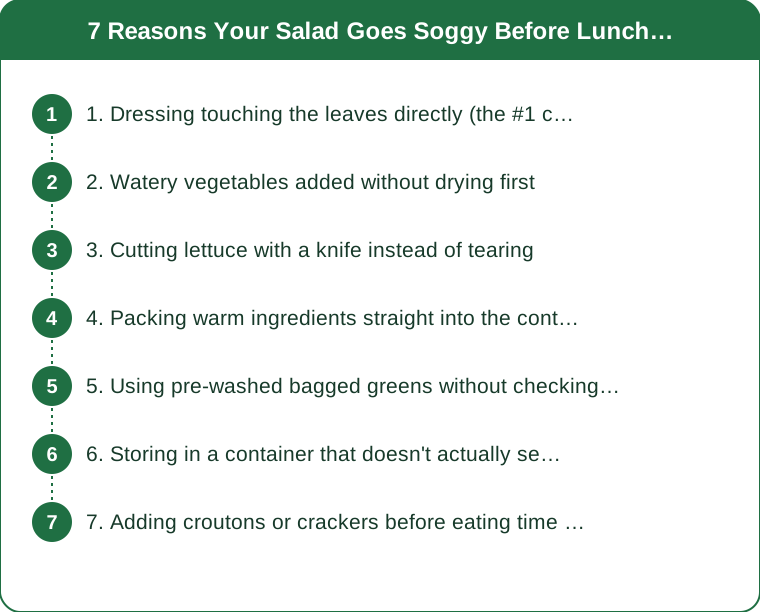
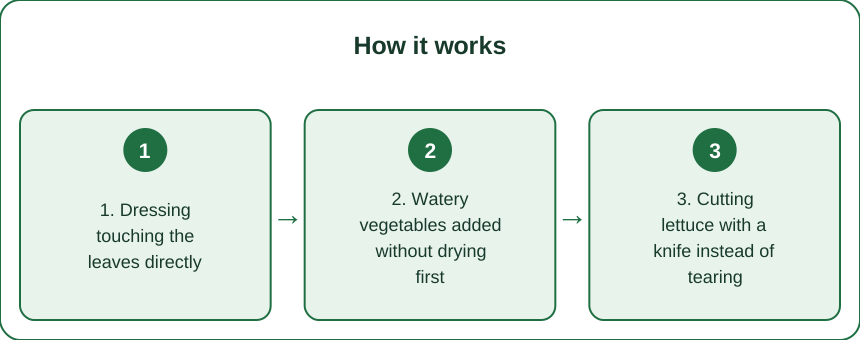
1. Dressing touching the leaves directly (the #1 cause)
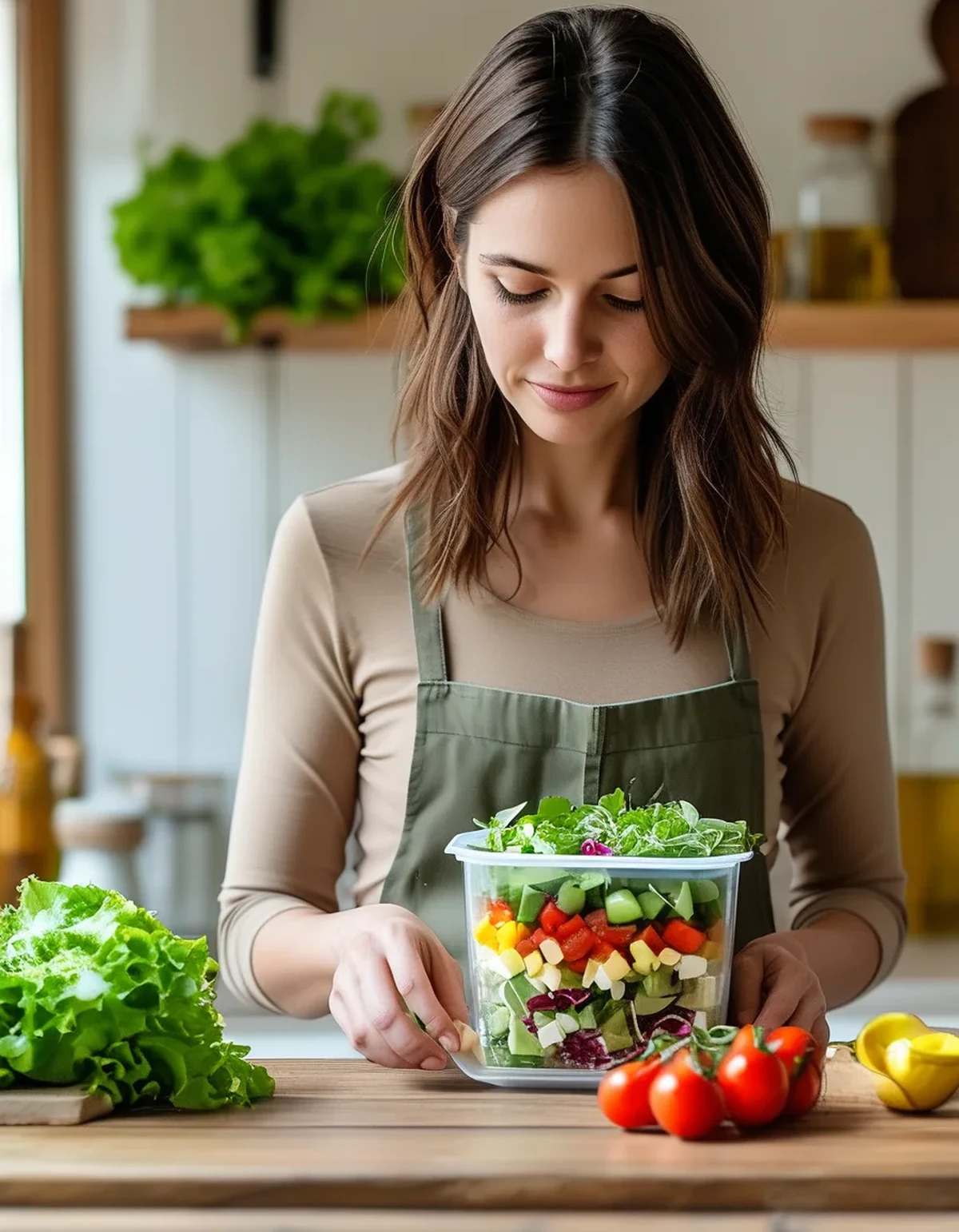
This is responsible for the majority of soggy make-ahead salads. Dressing sitting directly against lettuce for even 3-4 hours breaks down the leaf’s cell walls through salt and acid, turning crisp leaves limp and watery. The fix is a layered jar or container: dressing on the bottom, then hardy vegetables, then protein, then greens on top, untouched until you shake or toss right before eating.
2. Watery vegetables added without drying first
Cucumber, tomato, and thawed frozen corn all release water as they sit, and that water pools directly onto whatever’s beneath it. Salt draws out even more moisture from cucumber and tomato specifically — salting them ahead of packing (a common ‘flavor’ tip) actually accelerates sogginess. Pat these ingredients fully dry with a paper towel before adding, and salt them at eating time, not prep time.
3. Cutting lettuce with a knife instead of tearing
A metal knife blade bruises lettuce cell walls along the cut edge, and bruised edges brown and release moisture faster than a torn edge does. This is a small effect per cut but compounds across an entire prepped week of salads. Tearing by hand, while slightly less tidy-looking, keeps the cut edges healthier for longer storage.

4. Packing warm ingredients straight into the container
Warm roasted vegetables or just-cooked protein packed immediately create condensation inside a sealed container as they cool — that trapped moisture drips down onto everything below. Let warm components cool fully on a plate, uncovered, for 10-15 minutes before adding them to the salad container.
5. Using pre-washed bagged greens without checking for existing moisture
Bagged greens are often washed and spun but can still carry surface moisture, especially near the bottom of the bag. Adding them straight from the bag without a quick check or extra pat-dry introduces moisture you didn’t account for, on top of whatever other factors are already present.
6. Storing in a container that doesn’t actually seal well
A loosely-sealed container lets in ambient humidity from your fridge over several hours, which is a slower but real contributor, especially for salads stored more than a day. A genuinely airtight container measurably outperforms a snap-lid one that has any visible gap.
7. Adding croutons or crackers before eating time — and Your Meal-Prep Salad FAQ
This one doesn’t cause sogginess in the vegetables, but it’s the most visible symptom people blame on ‘a soggy salad’ — croutons added at prep time absorb ambient moisture and go soft within a couple of hours regardless of how well everything else was prepped. Pack crunchy elements separately, always.
How long can a properly layered salad actually stay crisp?
With dressing on the bottom and greens on top, most sturdy greens (romaine, kale) hold up well for 4-5 days; delicate greens (spinach, spring mix) are better for 2-3 days.
Does the order of layering really matter that much?
Yes — dense, sturdy items (grains, beans, hardy veg) go on the bottom near the dressing since they hold up to moisture; delicate greens always go on top, furthest from any liquid.
Is a mason jar or a flat container better for staying crisp?
Mason jars work well because the narrow shape naturally separates layers by weight; wide flat containers require more careful manual layering but hold more volume for bigger batches.
TL;DR:
- Dressing touching leaves directly is the #1 cause of soggy make-ahead salads
- Dry every wet ingredient (cucumber, tomato) before packing — don’t salt until eating time
- Tear greens instead of cutting, and let warm ingredients cool fully before packing
- Fix the top 2 reasons first — they account for most soggy-salad complaints
Repack your next batch dressing-first, greens-last, and dry every wet ingredient before it goes in — that alone usually solves it.
Keep Reading
This article is for general informational purposes only and is not medical advice. Always consult a qualified health professional for guidance specific to you.