7 Reasons Your Salad Needs Salt More Than It Needs More Dressing
Quick Answer: Dressing carries fat, acid, and flavor, but it distributes salt unevenly and in a diluted form. Salting the components directly — the greens lightly, the tomatoes early, the protein properly — makes the same salad taste dramatically more seasoned with less dressing overall. If your salads taste flat, add salt in the right places before you add another spoonful of vinaigrette.
Here is a test. Make your usual salad, then taste a single leaf on its own. Almost always, it tastes like nothing — because it is nothing but water and cellulose until you season it.
Dressing is not seasoning. It is a sauce. A sauce sitting on unseasoned ingredients tastes like a sauce sitting on unseasoned ingredients, which is exactly the flat-but-heavy result most home salads land on.
Seven reasons the salt shaker beats the dressing bottle.

1 and 2: Dressing distributes salt badly, and dilution works against you
1. Dressing cannot season what it does not touch evenly
Toss a bowl of greens and the dressing coats the outside of the leaves in a thin, uneven film. Some leaves get plenty, some get almost none, and the pieces buried underneath get whatever is left. Every bite is a different seasoning level, and your brain averages that into bland.
A pinch of fine salt tossed through the greens before the dressing goes on distributes far more evenly, because salt crystals are small, they scatter, and they dissolve in the surface moisture already on the leaf.
Try it side by side once. Same dressing, same quantity, one bowl pre-salted. The difference is not subtle.
2. The salt in dressing is diluted by everything else
A vinaigrette is mostly oil and acid. Whatever salt is in it is dispersed through that volume, so to get enough salt onto the salad you have to add enough dressing to make it greasy.
This is the core trade people make without realizing it. They add dressing until the flavor registers, and the flavor that finally registers is salt — but by then they have added twice the fat they wanted.
Season first, dress second, and you will find you need noticeably less dressing to hit the same flavor.
3 and 4: Timing changes what salt does, especially to vegetables
3. Salt on tomatoes ten minutes early is a different ingredient
Salt draws moisture out of cut tomatoes, and that liquid — now tomato juice with salt in it — becomes part of your dressing. Salt them, let them sit 10 minutes, and add them with their liquid.
The same applies to cucumbers, radishes, and summer squash. Pre-salting concentrates their flavor instead of leaving them as watery filler that dilutes everything else in the bowl.
This also solves a soggy-salad problem: much of the liquid pooling at the bottom of your bowl came out of unsalted vegetables slowly during the meal. Pull it out early and use it deliberately.
4. Salt on greens too early is a mistake, and that is why people avoid it entirely
Greens are delicate. Salt them 20 minutes ahead and they wilt.
The rule is different by ingredient: hard vegetables benefit from early salt, leaves want salt within a minute or two of eating. Most people learned somewhere that salting greens makes them wilt, concluded salt on salad is bad in general, and stopped seasoning anything.
Salt the leaves last, toss, serve. There is no wilting problem at that timescale.
5 and 6: The protein and the crunchy things are usually unseasoned
5. Cold protein needs more salt than hot protein
Chilled chicken, canned beans, hard-boiled eggs, cold shrimp, leftover salmon — all of these taste less seasoned cold than they did warm, because cold suppresses our perception of both salt and aroma.
A protein that tasted correctly seasoned last night at dinner will taste under-seasoned on today’s salad. Season it again after it comes out of the fridge, not just when you cooked it.
Beans out of a can are the biggest offender. Rinse them, then salt them, then let them sit for a few minutes before they go in the bowl.
6. Toppings are seasoning, and most people treat them as texture
Olives, capers, anchovy, parmesan, feta, toasted nuts with salt on them, pickled onion. These are all delivery systems for salt plus something else — acid, fat, umami.
A salad with two or three of these needs very little added salt, because the toppings are doing the work. A salad without any of them needs real seasoning and almost never gets it.
If your salad is greens, cucumber, and grilled chicken, there is nothing in that bowl carrying flavor. That is a seasoning problem, not a dressing problem.
7. The finishing salt does something a mixed-in salt cannot
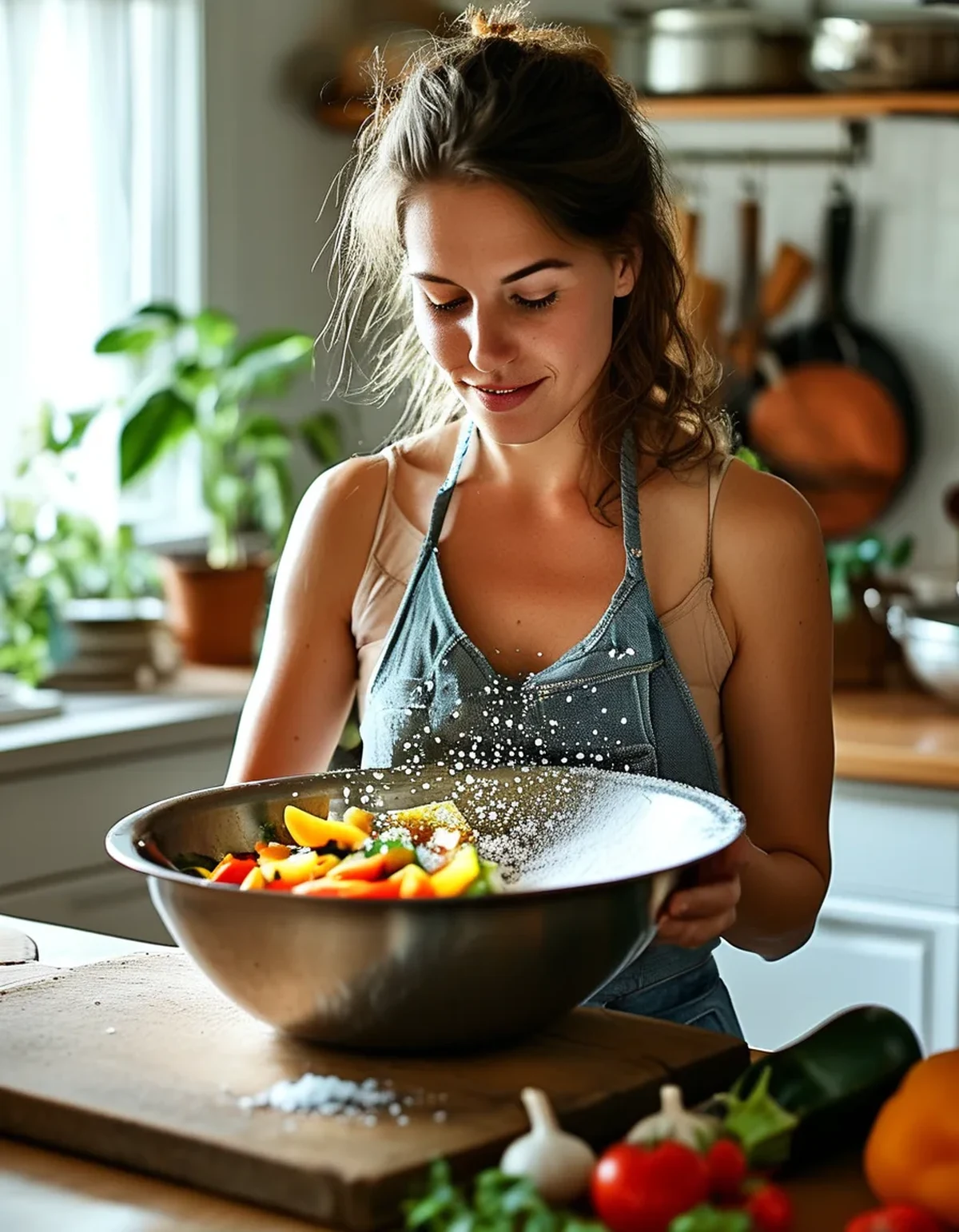
Flaky salt added at the table sits on the surface, undissolved, and gives you distinct bursts of salinity rather than a uniform background level.
This is a texture and contrast effect, not just a seasoning one. Your palate registers the peaks, which makes the whole dish taste more seasoned than the same amount of salt dissolved evenly through it. It is the reason a restaurant salad with a few flakes of Maldon on top tastes vivid while your identical bowl tastes muted.
Use a small amount — a pinch across the top of the finished bowl. Fine salt will not do it because it dissolves immediately.
If you keep one upgrade from this entire article, make it this one. It costs almost nothing, takes two seconds, and is the single most noticeable change most people can make to a home salad.
What Nobody Tells You About Acid and Salt Together
There is a second lever, and it is frequently the actual problem when salt alone does not fix things.
Salt and acid are separate dimensions, and people substitute one for the other without realizing. A salad that tastes flat despite adequate salt usually needs acid, not more salt — a squeeze of lemon over the finished bowl often does more than another tablespoon of vinaigrette.
The reverse is also true: a salad that tastes harsh or sharp often has plenty of acid and not enough salt to round it. Salt suppresses our perception of sourness and bitterness, which is why salting bitter greens like radicchio or arugula makes them taste sweeter.
Practical sequence that solves almost every flat salad:
- Salt the hard vegetables ten minutes early.
- Season the protein after it comes out of the fridge.
- Dress lightly — less than you think.
- Toss, taste one leaf.
- If flat, add acid. If sharp, add salt. If both, add both.
- Flaky salt across the top at the table.
Taste at step four. The habit of tasting a salad before serving it is the actual skill here, and most home cooks who taste everything else in a meal never taste a salad until it is on the plate.
FAQ: Salting Salads, Answered
How much salt does a bowl of greens actually need?
For a bowl serving four, roughly a quarter teaspoon of fine salt tossed through the greens, plus a small pinch of flaky salt on top at the end. Start lower than that if your toppings are salty — olives and parmesan can easily cover the entire requirement.
Does salting make salad unhealthy?
The amount involved is small relative to typical daily intake, and it commonly reduces how much dressing you use, which cuts more calories than the salt adds sodium. If you are on a sodium-restricted diet, use acid and aromatics — lemon, vinegar, herbs, shallot — as the primary lever instead. This is general information, not medical advice.
Should I salt a salad I am packing for lunch?
Salt the hard vegetables and protein, but keep greens, dressing, and finishing salt separate until you eat. Pre-salted greens sitting in a container for four hours will be limp.
TL;DR:
- Dressing is a sauce, not seasoning — it coats unevenly and dilutes the salt you were counting on.
- Salt hard vegetables ten minutes early; salt leaves seconds before serving.
- Cold protein and rinsed canned beans need re-seasoning after the fridge.
- Salty toppings do real seasoning work; a salad without them needs actual salt.
- Finish with flaky salt on top for contrast, and reach for acid when salt alone does not fix flat.
Next time a salad tastes boring, put the dressing bottle down and taste a single leaf. The answer is usually a quarter teaspoon of salt and a squeeze of lemon, not another two tablespoons of vinaigrette.
Keep Reading
This article is for general informational purposes only and is not medical advice. Always consult a qualified health professional for guidance specific to you.