7 Salad Prep Mistakes That Quietly Ruin Texture Before You Even Add Dressing
Quick Answer: The most common salad texture mistakes are washing greens without fully drying them, cutting lettuce with a knife instead of tearing it, adding dressing too early, packing wet ingredients directly against leafy greens, using dull knives on tomatoes and cucumbers, over-massaging delicate greens, and skipping a final chill before serving.
A salad’s texture is decided almost entirely during prep — dressing just reveals whether those earlier steps were done right.

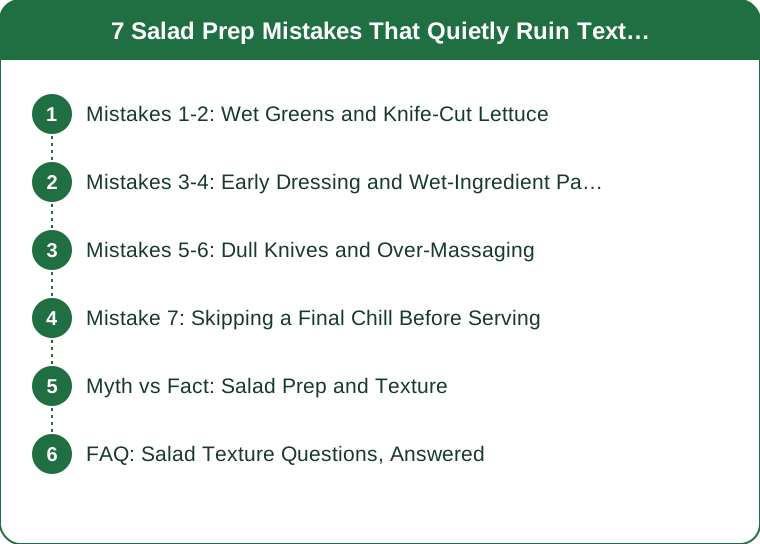
Mistakes 1-2: Wet Greens and Knife-Cut Lettuce
Mistake 1: Not fully drying washed greens
Residual water left on washed greens dilutes dressing and speeds up wilting, since trapped moisture accelerates the breakdown of leaf structure. A salad spinner, or a thorough pat-dry with a towel, removes far more water than most people assume is still clinging to “dry-looking” leaves.
Mistake 2: Cutting lettuce with a metal knife
Metal knife blades bruise lettuce cell walls at the cut edge, causing faster browning and a slightly slimy texture at the cut line within an hour or two. Tearing lettuce by hand, or using a plastic knife, avoids this specific bruising reaction and keeps edges crisper longer.
Mistakes 3-4: Early Dressing and Wet-Ingredient Packing
Mistake 3: Adding dressing too early
Dressing, especially anything acidic or oil-based, starts breaking down leaf structure on contact, which is why a dressed salad left sitting even 20 to 30 minutes noticeably softens compared to one dressed just before eating. Tossing dressing in immediately before serving, not during prep, preserves crunch far longer.
Mistake 4: Packing wet ingredients directly against leafy greens
Tomatoes, cucumbers, and other high-water ingredients release moisture over time, and packing them directly touching leafy greens transfers that moisture and speeds wilting, especially in a stored or meal-prepped salad. Layering wetter ingredients separately, or at the bottom of a mason jar salad, keeps greens crisper for days longer.
Mistakes 5-6: Dull Knives and Over-Massaging
Mistake 5: Using dull knives on tomatoes and cucumbers
A dull knife crushes rather than cleanly slices high-water vegetables, releasing more juice at the cut surface and creating a mushier texture than a sharp, clean cut would produce. Keeping a knife reasonably sharp is a small habit with an outsized effect on salad texture specifically.
Mistake 6: Over-massaging delicate greens
Massaging kale or similar hearty greens breaks down toughness in a genuinely useful way, but applying the same technique to delicate greens like spinach or butter lettuce turns them mushy almost immediately. Reserving massaging specifically for sturdy greens, and skipping it for delicate ones, avoids an easy mismatch.

Mistake 7: Skipping a Final Chill Before Serving
Salad ingredients prepped at room temperature, especially in a warm kitchen, wilt noticeably faster than ones given a brief chill before serving. A quick 10 to 15 minutes in the refrigerator after final assembly, right before serving, firms up texture in a way that’s easy to skip but makes a real difference.
Myth vs Fact: Salad Prep and Texture
Myth: soggy salad is mainly a dressing quantity problem. Fact: prep mistakes — wet greens, early dressing, knife-cut lettuce — are usually the bigger driver of sogginess than how much dressing was used.
Myth: all salad greens should be treated the same way during prep. Fact: sturdy greens like kale and delicate greens like spinach respond very differently to techniques like massaging, cutting, and even how long they can sit dressed.

FAQ: Salad Texture Questions, Answered
Does the type of salad spinner matter for drying greens effectively?
Any functional spinner works reasonably well; the key factor is thoroughness, not the specific spinner model.
How long can a properly prepped salad sit before it starts wilting?
Undressed, properly dried greens stored well can hold good texture for several days; dressed salad typically starts softening within 30 minutes to an hour.
Is tearing lettuce always better than cutting it with a knife?
For most leafy lettuces, yes, though sturdier vegetables like cabbage hold up fine to knife cutting without the same bruising issue.
TL;DR:
- Dry greens thoroughly and tear rather than knife-cut lettuce
- Add dressing only right before serving, not during prep
- Keep wet, high-moisture ingredients separated from leafy greens in storage
- Use a sharp knife on tomatoes and cucumbers, and reserve massaging for sturdy greens only
- A quick chill before serving firms texture that room-temperature prep loses
Most soggy salads were decided during prep, long before the dressing bottle ever came out.
Keep Reading
This article is for general informational purposes only and is not medical advice. Always consult a qualified health professional for guidance specific to you.