The Salad Formula: How to Build Salads You Actually Crave
Somewhere between the sad desk salad and the 1,200-calorie restaurant caesar lies the salad you actually want: substantial, textured, flavorful, and genuinely good for you. The difference is not virtue — it is architecture. Great salads follow a six-layer formula that guarantees every forkful earns its place. Learn it once, and salad graduates from penance to preference. Lab coat optional.
Why Most Salads Fail (a Post-Mortem)
The sad salad has a predictable autopsy: watery base (iceberg doing its best, which is little), no protein (hence the 3pm hunger ambush), no fat (hence the joylessness — and worse, fat-soluble vitamins in those vegetables largely need fat to absorb), and dressing chosen by guilt. The result satisfies nobody and slanders salads everywhere. The fix is structural: a salad is a meal-construction format, not a diet food. Built correctly it out-satisfies most sandwiches. Built sadly it is expensive lettuce.
The Six Layers
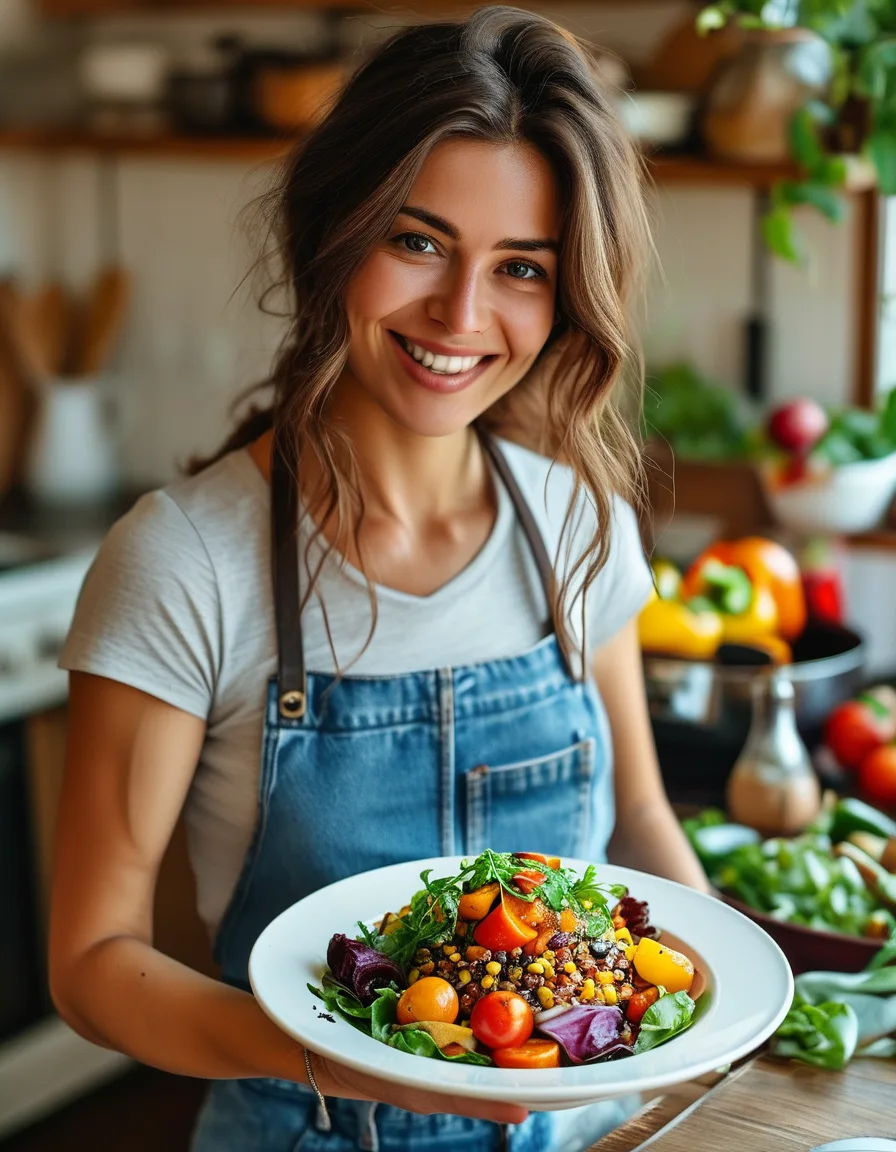
Layer one, base: darker greens (spinach, kale, romaine) or half greens, half cooked grains — the upgrade that makes it dinner. Two, protein, non-negotiable: chicken, salmon, eggs, chickpeas, tofu, tuna — a palm-sized portion. Three, crunch: nuts, seeds, croutons, crispy chickpeas — texture is why you keep forking. Four, something creamy: avocado, feta, goat cheese, a soft egg. Five, the punch: a loud small player — pickled onions, olives, dried cherries, fresh herbs, chili flakes. Six, dressing with conviction. Six layers, every time, infinite outcomes.
Dressing: Two Minutes, One Jar, No Guilt
Homemade dressing is the highest ROI in salad-making: the ratio is three parts oil to one part acid, plus an emulsifier and a personality. House vinaigrette: olive oil, lemon or vinegar, teaspoon of Dijon (the emulsifier), teaspoon of honey, salt, shaken in a jar — 45 seconds, keeps a week. Variations: add tahini and water for creamy; soy and ginger for Asian bowls; blended herbs and Greek yogurt for ranch energy. And retire the guilt: dressing fat is what unlocks the vitamins and the pleasure. An undressed salad is nutritionally and spiritually incomplete.
Five Lab-Tested Combinations
The Mediterranean: romaine and farro, chickpeas, cucumber, feta, olives, red onion, lemon-oregano vinaigrette. The Harvest-in-July: spinach, grilled chicken, peaches, goat cheese, candied pecans, balsamic. The Crunch Thai: cabbage and romaine, edamame, peppers, peanuts, cilantro, peanut-lime dressing. The Cobb, Rebuilt: greens, turkey, eggs, avocado, tomatoes, blue cheese, light ranch. The Pantry Hero: any greens, white beans, tuna, pickled onions, croutons, mustard vinaigrette — assembled entirely from shelf and fridge staples on a day you swore there was no food. Each one: 400–550 satisfying calories, 25-plus grams protein.
Make-Ahead Physics (the Crisp Preservation Act)
Salad prep fails when layers meet too early — so control the meeting time. Jar method for lunches: dressing on the bottom, then hard vegetables, grains and proteins, then nuts, greens at the very top; shake at noon, crisp guaranteed for four days of jars. Component method for dinners: washed greens in a towel-lined container, proteins and grains prepped, dressing in its jar — assembly takes three minutes and nothing wilts in waiting. Dress only what you will eat now. Tomorrow’s salad thanks you for your restraint.
Salad, redeemed by engineering: six layers, a jar of house vinaigrette, and the make-ahead rules that keep crunch alive till Thursday. Build the Mediterranean version this week — grains in the base, protein without apology, dressing with conviction — and notice the strange new sensation of finishing a salad satisfied. That is not virtue. That is architecture, and now you hold the blueprints.
Keep Reading
This article is for general informational purposes only and is not medical advice. Always consult a qualified health professional for guidance specific to you.