7 Reasons Your Salad Goes Soggy Before Lunch, Ranked by How Common They Are
Quick Answer: Soggy meal-prepped salad is almost always a layering or dressing-timing problem, not a freshness problem — wet ingredients touching leafy greens overnight, or dressing added before storage instead of at the moment of eating, are responsible for most soggy salads, far more often than the greens themselves being old.
The lettuce was crisp going into the container. Twelve hours later it’s limp, and the instinct is to blame the vegetable instead of the packing method.

The 7 Reasons, Ranked
1. Dressing added before storage instead of at eating time (most common). Dressing sitting against greens for hours draws moisture out through osmosis, wilting leaves well before the salad is even opened. Packing dressing separately and adding it right before eating solves this almost entirely.
2. Wet ingredients layered directly against the greens. Tomatoes, cucumbers, and other high-moisture vegetables release liquid over time — placed directly on top of lettuce, that liquid seeps down and wilts the greens from contact, even without any dressing involved.
3. Not drying greens thoroughly after washing. Residual water clinging to leaves after washing adds to the moisture problem before anything else is even added — a salad spinner or thorough paper-towel dry makes a real, measurable difference.
4. Using delicate greens (baby spinach, arugula) for longer storage. Sturdier greens like romaine or kale hold up meaningfully longer than delicate baby greens, which wilt faster regardless of how well everything else is packed.
5. Packing warm ingredients (like just-cooked protein) directly on top of cold greens. The temperature difference creates condensation inside the container, adding moisture exactly where it does the most damage — cooling proteins fully before assembling matters more than it seems.
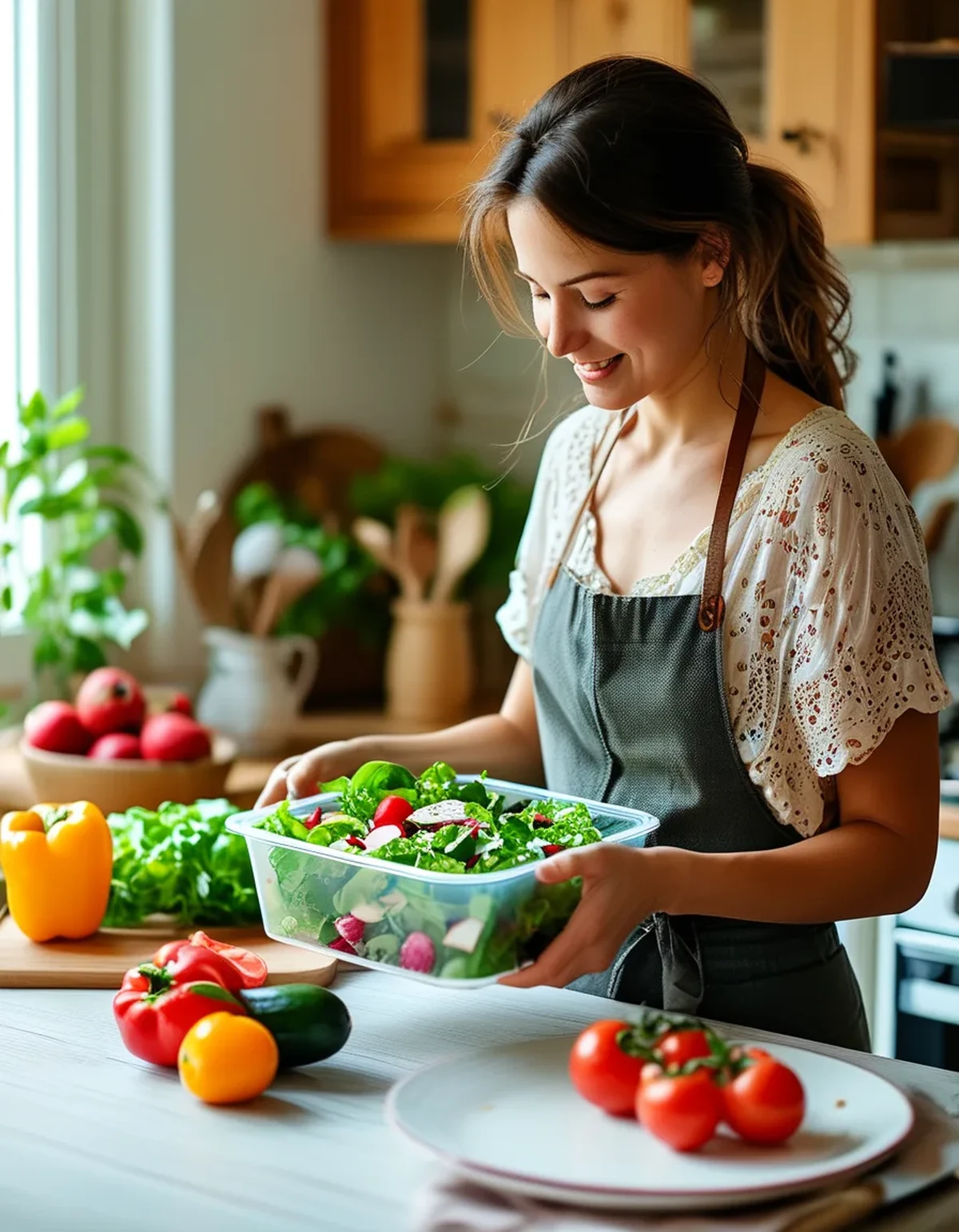
6. Using a container without proper drainage or airflow. A fully sealed, non-vented container traps humidity that a slightly more breathable container (or one with a paper towel layer at the bottom) would allow to dissipate.
7. Storing for longer than the greens’ realistic shelf life, regardless of technique. Even perfectly packed, most fresh greens have a genuine 3-4 day realistic window in a meal-prep container — expecting a soggy-free salad on day 5 is often beyond what any packing method can prevent.
What’s the actual correct layering order for a salad meant to sit overnight?
Dressing (separate container) at the very bottom of the plan, then heartier vegetables (carrots, peppers) at the bottom of the main container, then protein, then cheese or nuts, with delicate greens layered on top, last. This order means the greens touch the least moisture and the least weight, both of which contribute to wilting when reversed.
Does the type of container actually make a measurable difference?
A container with a slight amount of airflow, or one lined with a paper towel to absorb excess condensation, meaningfully outperforms a fully airtight container for salads specifically, even though airtight is usually the better choice for most other meal-prepped food. This is a case where the general meal-prep rule (seal everything tightly) works against the specific goal of keeping greens crisp.
FAQ: Soggy Salad Questions, Answered
How long can a properly layered salad realistically stay fresh?
With correct layering, dressing kept separate, and sturdy greens, 3-4 days is a realistic window in most refrigerators — beyond that, quality drops regardless of technique.
Does adding dressing right before eating actually make a noticeable difference, or is it a minor factor?
It’s one of the biggest single factors — dressing sitting on greens for even a few hours accelerates wilting significantly compared to the same salad with dressing added at the moment of eating.
Are pre-washed bagged greens more or less prone to sogginess than washing your own?
Pre-washed bagged greens can actually retain more residual moisture from processing than home-washed and thoroughly dried greens, so drying isn’t a step to skip just because greens came pre-washed.
TL;DR:
- Dressing added before storage is the single biggest cause of soggy meal-prepped salad
- Layering order matters: dressing separate, hearty vegetables first, greens on top last
- Thoroughly drying greens after washing (even pre-washed ones) makes a real difference
- Even perfect technique has a realistic 3-4 day shelf-life ceiling for fresh greens
A soggy salad isn’t a sign the greens were bad — it’s almost always a layering and timing fix away from staying crisp.
Keep Reading
This article is for general informational purposes only and is not medical advice. Always consult a qualified health professional for guidance specific to you.