Why Dressing Should Go on the Bowl Before the Greens, Not After
Pouring dressing over a finished salad from the top is the default habit for most people, and it’s also the reason the bottom third of the bowl ends up swimming while the top stays dry — the fix isn’t a different dressing, it’s reversing the order everything goes into the bowl.

Why Dressing-First Assembly Prevents the Soggy-Bottom Problem
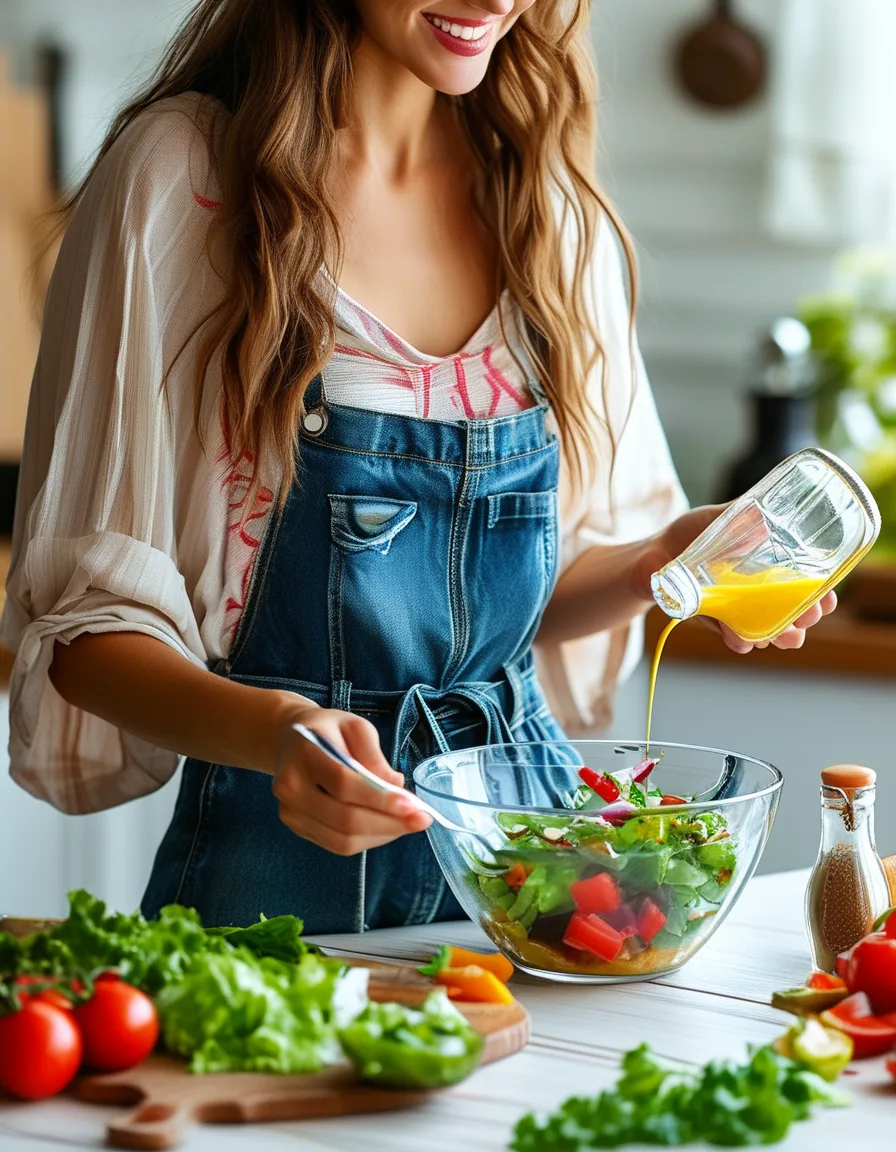
The pooling mechanism: the dressing-poured-on-top-sinks-straight-down (the liquid traveling directly to the bottom of the bowl through gravity rather than coating evenly — the straight-to-the-bottom), the the-bottom-greens-sit-in-pooled-dressing (the lowest layer marinating in excess liquid while upper layers stay untouched — the bottom-layer-marinates), the the-tossing-after-the-fact-doesnt-fully-fix-it (the mixing after pouring redistributing some but not eliminating the original pooling — the tossing-only-partially-helps), and the reframe (the soggy bottom being a direct, predictable result of pour order, not something tossing afterward reliably solves).
The Specific Layering Order That Keeps Every Bite Balanced
The build sequence: the dressing-goes-in-the-bowl-first (the liquid coating the bottom of the empty bowl before anything else is added — the dressing-as-base-layer), the the-sturdy-vegetables-go-in-next (the heartier chopped vegetables tossed directly in the dressing at the bottom — the sturdy-veg-second), the the-greens-added-last-and-tossed-gently (the delicate leaves going in last and getting coated only by the toss, never sitting in a pool — the greens-last-light-toss), and the frame (dressing, then sturdy vegetables, then greens last — an order that coats everything evenly instead of drowning whatever’s at the bottom).
How to Build a Salad This Way Without Extra Dishes
The practical routine: the use-the-final-serving-bowl-for-assembly (the building directly in the bowl you’ll eat from rather than a separate mixing bowl — the one-bowl-method), the the-add-dressing-in-a-thin-layer-not-a-pool (the pouring a modest amount across the bottom rather than a heavy puddle — the thin-base-layer), the the-toss-once-right-before-eating (the final gentle toss happening immediately before serving rather than sitting assembled — the toss-just-before-eating), and the frame (one bowl, a thin dressing base, sturdy vegetables next, greens last, tossed right before eating — no extra equipment, just a reversed order).
Pouring dressing over a finished salad sends the liquid straight to the bottom of the bowl through gravity, where it pools and marinates the lowest layer of greens while the top stays dry, and tossing afterward only partially redistributes that original pooling. The fix is reversing the build order: dressing goes into the empty bowl first as a thin base layer, sturdier chopped vegetables go in next directly on top of the dressing, and delicate greens go in last, getting coated only by the final toss rather than sitting in a pool. Build it directly in the serving bowl with a thin dressing layer rather than a heavy pour, and give it one gentle toss right before eating rather than assembling it ahead of time.
Keep Reading
This article is for general informational purposes only and is not medical advice. Always consult a qualified health professional for guidance specific to you.