Warm Salads: the Category That Saves Salad Season From Ending in September
Quick Answer: The salad habit collapses every fall because cold-and-crunchy stops being appetizing when you’re cold — the fix is the warm salad: a roasted or sautéed vegetable base, sturdy greens that welcome wilting (kale, spinach, chard), a grain or legume for heft, and a warm dressing poured over everything. Same nutrition profile as summer salads, completely different comfort math. The formula: warm base + wilting green + protein/grain + warm vinaigrette + crunch element.
Every October, the salad streak dies the same death: the weather turns, the raw chopped bowl starts feeling like a punishment, and the vegetable intake quietly halves until spring. The problem was never salads — it was defining salad as cold, which was always just a summer default wearing a rulebook costume.
Why do cold salads stop working in cold weather?
The appetite science is straightforward: in cold conditions bodies crave warm, calorie-denser food — it’s thermoregulatory common sense expressed as preference, and it steamrolls willpower reliably enough that ‘I should want this salad’ loses to soup by mid-November.
Add the seasonal produce collapse: the tomatoes and cucumbers that made summer salads sing are cardboard by October, so the cold salad is fighting cravings and fielding its B-team ingredients simultaneously.
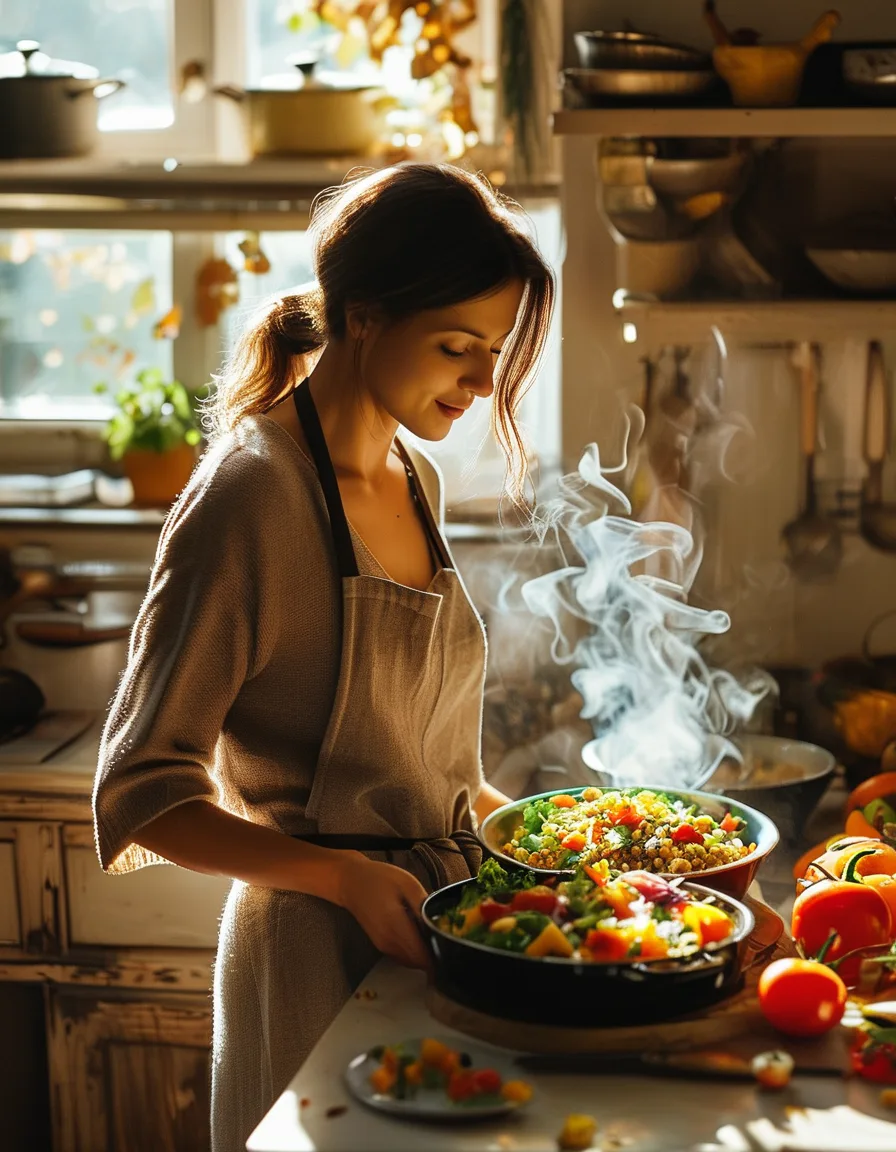
The warm salad dissolves both problems at once: warmth satisfies the seasonal craving, and the format is built around exactly what fall and winter produce does best — roasted roots, hardy brassicas, sturdy greens, winter squash. It’s not a compromise version of salad; it’s the format the season’s ingredients were waiting for. (The nutrition note that reassures the raw-food-worried: cooking shifts rather than destroys the profile — some vitamin C trades for better absorption of carotenoids and more comfortable volume, a trade the rainbow-cooking science files under ‘fine.’)
What’s the warm salad formula?
The five-slot template:
- Warm base (the star): roasted anything — squash, sweet potato, cauliflower, brussels sprouts, beets, carrots — tray-roasted at 200°C until edges brown. Or sautéed mushrooms, or charred broccoli. Batch-roast on Sunday and the weeknight version assembles in minutes.
- The wilting green: kale (massaged or heat-wilted), spinach (collapses perfectly under warm toppings), chard, or shredded cabbage (holds crunch against heat). The move: put greens in the bowl and pour the warm base over them — the residual heat wilts them to exactly tender.
- Heft: a grain (farro, quinoa, barley — warm) or legume (chickpeas, lentils — roasted chickpeas double as crunch) — this is what makes it dinner instead of a side.
- Warm dressing (the transformation): warm vinaigrettes change everything — the classic: warm the oil gently, whisk in mustard, vinegar or lemon, a touch of honey; or the pan-sauce method: deglaze the sauté pan with vinegar and pour the warm result over. Tahini thinned with warm water is the creamy route.
- Contrast crunch: toasted nuts or seeds, croutons, crispy chickpeas, pomegranate — the textural spark cold salads got from raw vegetables has to come from somewhere.
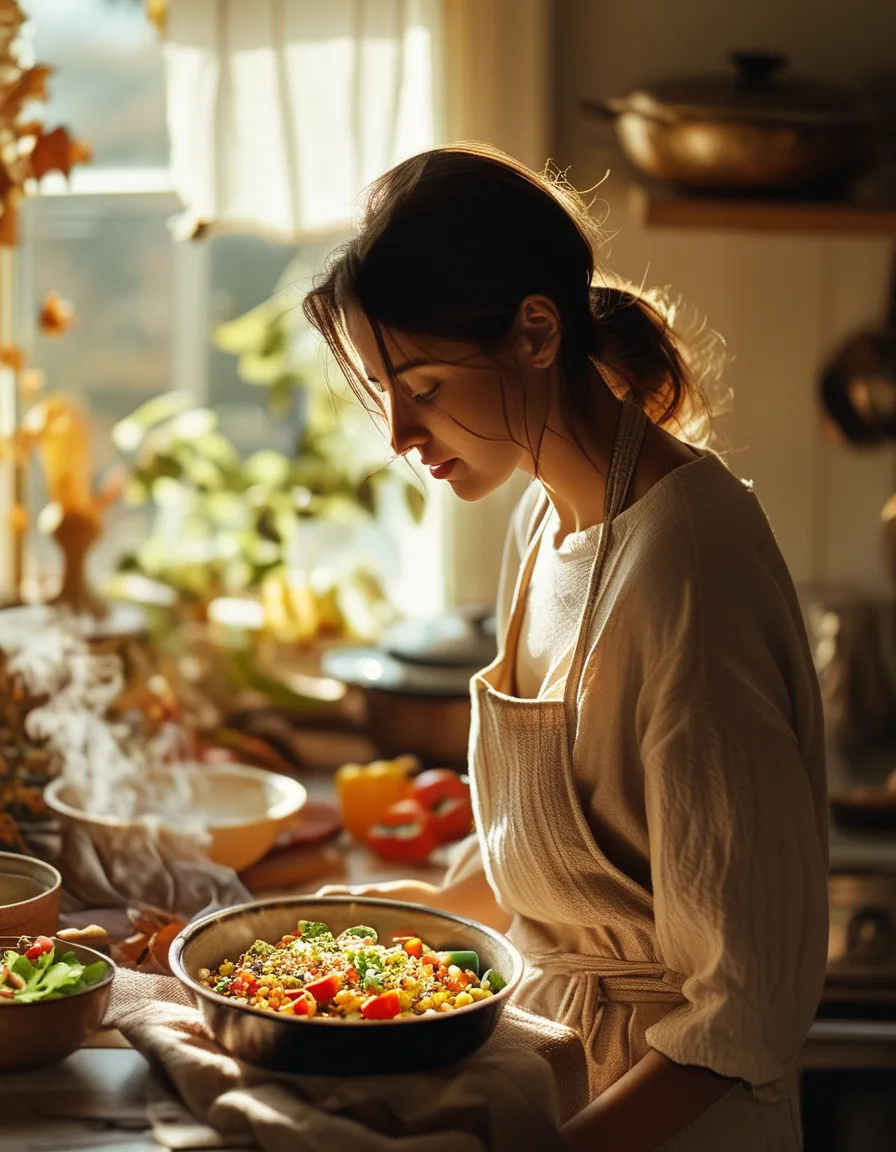
Three proven combinations to start: roasted squash + wilted kale + farro + warm sage vinaigrette + pepitas; charred brussels + spinach + lentils + warm mustard dressing + toasted walnuts; sautéed mushrooms + chard + barley + pan-deglazed balsamic + parmesan crisp.
Myth vs Fact: Warm Salad Edition
Myth: A warm salad is just a grain bowl with branding. Fact: Kissing cousins, distinct centers of gravity — the warm salad keeps greens as a structural component (a third or more of the bowl) and dressing as the flavor spine; grain bowls center the grain with greens as garnish. The distinction matters for the vegetable math you’re trying to protect through winter.
Myth: Wilted greens are nutritionally defeated greens. Fact: Wilting is barely-cooking — brief heat shrinks volume (letting you eat more leaves per bowl, a quiet win) with modest nutrient impact, and the minerals and fiber ride through untouched. The overboiled-to-army-green fate is a different crime entirely.
Myth: Salad requires lettuce, and lettuce can’t be warm. Fact: The lettuce-only definition is summer provincialism — globally, warm and wilted salads are everywhere (wilted spinach salads, warm potato salads, charred-vegetable mezze). And even lettuce plays warm-adjacent: grilled romaine is a legitimate revelation. The category was always bigger than the cold crisper drawer.
The reframe underneath: ‘eating more vegetables’ fails as a willpower project and succeeds as a format project — winter didn’t end salad; it ended one format, and the season’s own format was sitting in the oven.
FAQ: Warm Salad Questions, Answered
Can I meal-prep warm salads without sog?
Yes — the component logic: roasted base, grain, and crunch stored separately; greens raw in the bowl; reheat base and grain, pour over greens (the wilt happens fresh), dress, top. Five minutes to a just-made bowl all week — the sog only comes from storing it assembled.
What about warm salads in summer — legal?
Fully — charred corn and halloumi over greens, grilled vegetable salads, warm potato salad with mustard vinaigrette — the format is seasonless; it just rescues winter specifically. The real rule: match the salad’s temperature to the day’s appetite, which is what your cravings were voting for all along.
How do I keep the greens from turning to mush under hot toppings?
Heat management: let the roasted base rest 2-3 minutes off the tray before pouring (blazing-hot collapses; warm wilts), use sturdier greens for hotter toppings (kale > spinach on this axis), and add the most delicate greens after a first toss. The target texture is ‘relaxed,’ not ‘surrendered.’
TL;DR:
- Cold salads lose to cold weather by design — warmth is what the seasonal appetite demands, and the warm salad supplies it with the same vegetable math
- Formula: roasted base + wilting green + grain/legume + warm dressing + crunch — pour warm over raw and let residual heat do the wilting
- Warm vinaigrettes and pan-deglazing are the transformation step; batch-roasting makes it a weeknight format
- Component-prep separately, assemble fresh — winter salads that actually get eaten
Salad season never had to end in September — it just needed to preheat the oven. This is general information, not medical advice.
Keep Reading
This article is for general informational purposes only and is not medical advice. Always consult a qualified health professional for guidance specific to you.