Why Your Salad Goes Soggy and the Build Order That Prevents It
Quick Answer: Salads go soggy through two separate mechanisms: salt and acid in dressing pull water out of cut vegetables through osmosis, and oil coats greens so they collapse and cannot recover. Both are functions of contact time, which means sogginess is controlled by the order you build in, not the ingredients you buy. Keep dressing away from leaves until serving, put juicy and dressed items at the bottom, dry greens at the top, and use sturdy elements as a barrier layer in between. The same salad, stacked differently, lasts hours instead of minutes.
Here is what is actually happening in the bowl, and the build order that stops it.
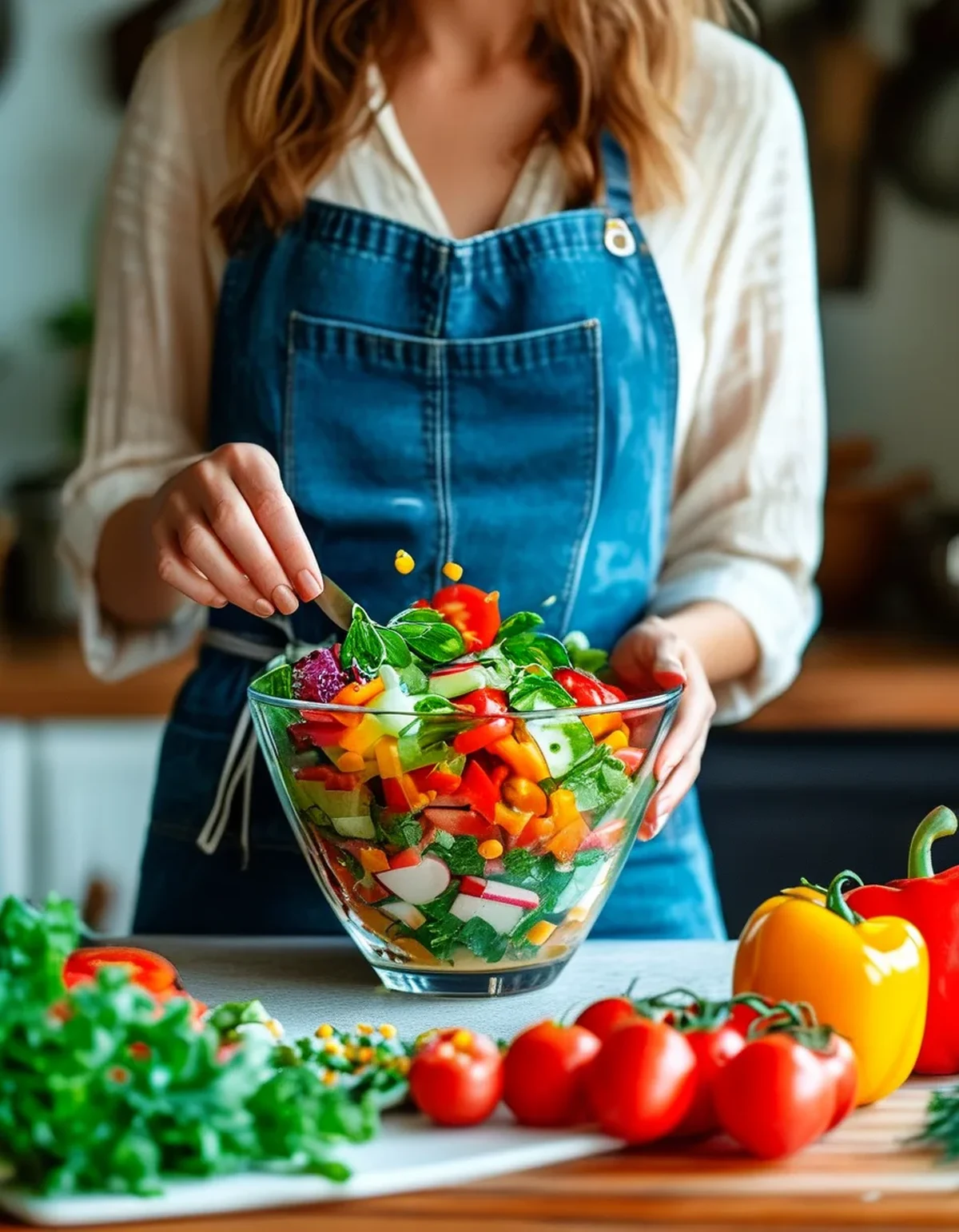
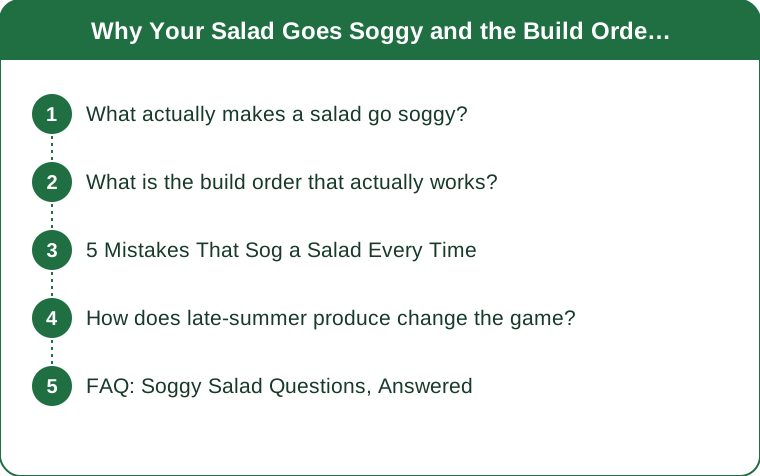
What actually makes a salad go soggy?
Two different processes that usually get blamed as one — and they have different fixes.
The first is osmosis. Salt and acid — the two things every good dressing is built on — pull water out of plant cells on contact. Sprinkle salt on cut cucumber and within minutes it sits in a puddle of its own water. The same thing happens quietly to every cut surface in a dressed salad: tomatoes, cucumbers, and fruit weep their water into the bowl, the dressing thins into a watery pool, and everything below the waterline soaks in it.
The second is oil collapse. Lettuce leaves stay crisp because their surfaces repel water and their cells are full and firm. Oil is the workaround — it clings to the waxy surface where water rolls off, which is exactly why vinaigrette works. But once oiled, a leaf’s structure starts giving up: the coating spreads, light gets through, and the leaf goes dark, limp, and translucent. Unlike a salted cucumber, which is arguably improved, an oiled leaf never comes back.
Both processes run on contact time. A leaf dressed thirty seconds before eating is perfect; the same leaf dressed at noon is compost by dinner. This is the entire insight: you cannot buy your way out of sogginess with better greens, because the mechanism is chemical and patient. You can only schedule around it.
There is a third, sneakier contributor: wet greens from washing. Water clinging to leaves dilutes the dressing, makes it slide off instead of coating, and starts the wilting clock early. Drying greens thoroughly — spinner, then a few minutes on a towel — is the least glamorous step in salad making and the one that separates restaurant-crisp from home-limp.
What is the build order that actually works?
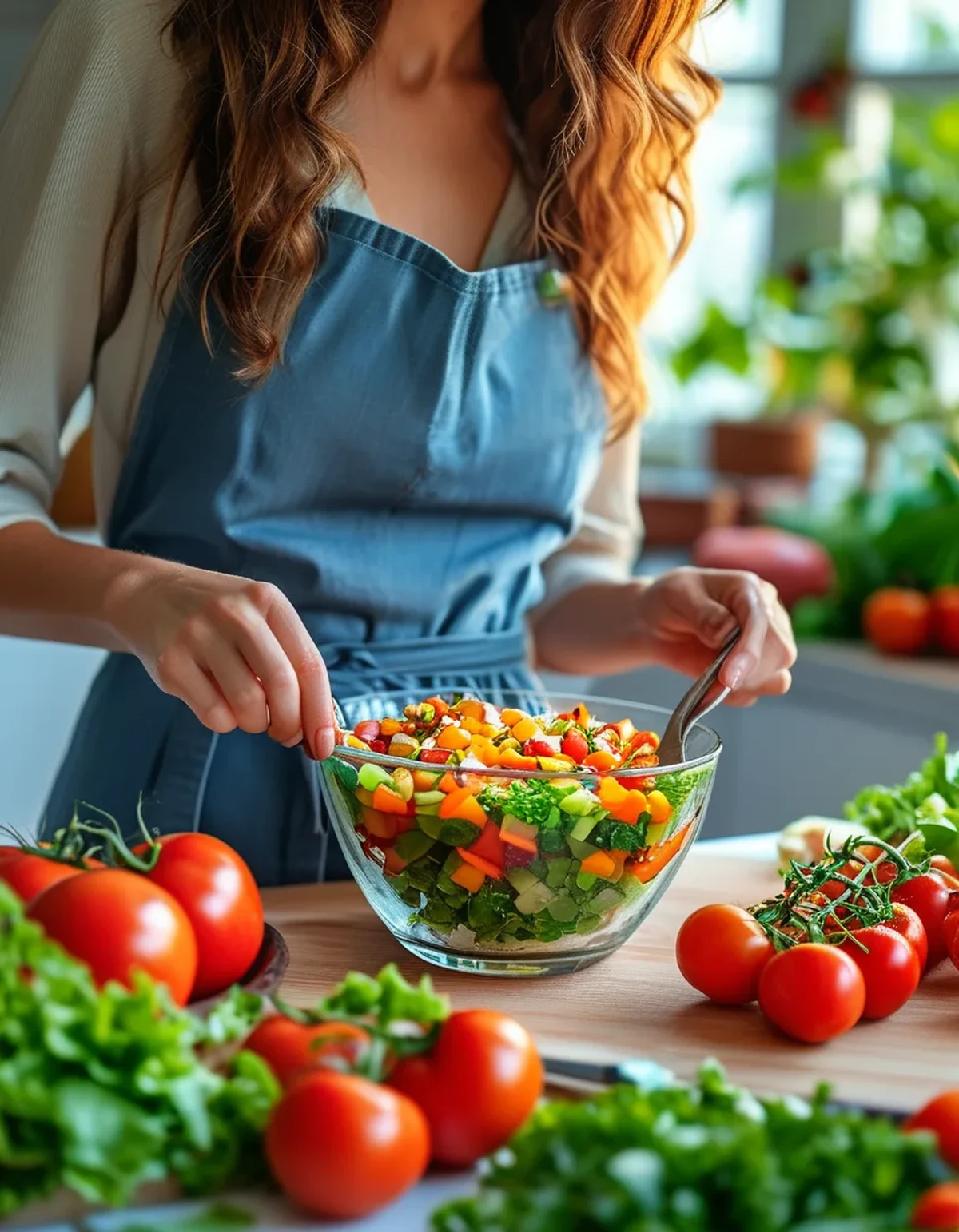
Bottom to top, by one rule: the wettest and most dressed things go furthest from the leaves.
Layer one, the bottom: dressing and the sturdy soakers. If the salad must travel or wait, dressing goes in first, directly against ingredients that are improved by sitting in it — beans, chickpeas, grains, roasted vegetables, cut tomatoes, onions. These are the marinating layer: what ruins lettuce flavors farro.
Layer two: the barrier. Dense, water-resistant items that physically separate the wet zone from the dry — cucumbers, peppers, carrots, celery, cabbage, a layer of grains if they are not already below. Their job is structural: keep the pool downstairs.
Layer three: proteins and soft extras. Chicken, eggs, cheese, avocado if it is going in early — things that tolerate a little humidity but should not swim.
Layer four, the top: greens, bone dry. Lettuce, spinach, arugula, herbs — untouched by dressing, uncompressed, with air around them.
Crunch stays outside entirely. Croutons, nuts, seeds, and crispy onions in a separate bag or jar lid until the moment of eating. No barrier layer protects a crouton; humidity alone defeats it.
At serving time, one motion: tip and toss, so the dressing at the bottom travels up through everything at the last minute. In a jar, this is the whole design — the famous mason-jar salad is just this build order rotated vertical. In a lunch container, the same logic applies with the dressing in a small cup if tipping is unreliable.
Eating immediately at home? Then the order inverts entirely: dress the greens first, alone, with less dressing than you think, toss thoroughly, then add everything else on top. Immediate salads want maximum coating; delayed salads want maximum separation. Same ingredients, opposite architecture, and the difference is only when you plan to eat.
5 Mistakes That Sog a Salad Every Time
Dressing the whole bowl because the recipe said toss and serve. Recipes assume you are eating now. If the bowl is for a potluck table or tomorrow’s lunch, toss-and-serve instructions are the enemy — dress the base layer only, or bring the dressing alongside.
Salting the greens early. Salt directly on leaves starts osmosis immediately, even without dressing. Season the dressing itself, or salt at the table — the flavor is identical, the timeline is not.
Skipping the drying step. Wet-washed greens are pre-soggy: the water dilutes and repels the dressing, then wilts the leaf anyway. A salad spinner is the highest-value tool in the process, and the towel finish afterward is what the crisp places do that you probably skip.
Cutting everything small. More cut surface means more exposed cells, faster water loss, and faster collapse. For make-ahead salads, bigger pieces survive better — halved cherry tomatoes weep less than quartered, torn lettuce beats chopped, and whole leaves beat everything.
Treating avocado like a barrier vegetable. Avocado is soft, oxidizes fast, and smears into a coating that soggs everything it touches. It goes on top at serving time, or gets tossed in the acidic dressing layer where the citrus slows the browning — never mid-stack.
How does late-summer produce change the game?
August is peak salad season and peak sogginess season simultaneously, for the same reason: everything is at maximum ripeness and maximum water content.
Peak tomatoes are the wettest of the year. A perfectly ripe August tomato is a water balloon with ambition — glorious, and structurally hostile to everything under it in the bowl. The move is to treat tomatoes as a marinating-layer resident always in this season, or better, salt them separately in their own bowl for ten minutes, pour off the exuded juice, and add them drained. Bonus: that poured-off tomato water, whisked into the vinaigrette, is a genuinely great dressing upgrade.
Cucumbers and melons want pre-salting too. The same drain-first trick firms them up and concentrates flavor — the difference between cucumber that crunches at hour three and cucumber that squeaks sadly in a puddle.
Corn and peppers are your best barrier-layer friends right now. Raw corn cut from the cob and diced peppers are sturdy, sweet, in season, and nearly weep-proof — load the middle stack with them and the architecture improves for free.
Delicate summer herbs need the greens treatment. Basil especially: dressed or bruised early, it blackens within the hour. Tear it over the top at the very end, always.
Heat itself accelerates everything. The osmosis and wilting that take three hours in a cool kitchen take one on a picnic table in the sun. For outdoor eating, the separated build is not optional — dressing in a jar, crunch in a bag, assembly on site. Ten extra seconds of ceremony, and the salad that reaches the end of the cookout still looks like the beginning.
FAQ: Soggy Salad Questions, Answered
How far ahead can I really make a salad?
Built in the layered order with dry greens on top and dressing at the bottom: a full day ahead holds well, and sturdy jar builds go two to three days. The moment of truth is only ever the toss — everything stays in its lane until then.
Is there any way to revive wilted lettuce?
If it wilted from dryness — limp but not oiled — a fifteen-minute soak in ice water re-inflates the cells surprisingly well. If it wilted under dressing, no: the oil coating is permanent, and the rescue is a frittata or soup, not the bowl.
Do those salad kits stay crisp longer than homemade?
They follow exactly these rules: dressing sealed separately, crunch sealed separately, greens dried industrially before bagging. The kit is the architecture pre-packaged — replicate the separation at home and homemade wins on every other axis.
What about creamy dressings — same rules?
Stricter. Creamy dressings carry more water and cling heavier, so they collapse leaves faster than vinaigrettes and do not marinate the base layer as usefully. Keep creamy dressings fully separate until serving, and thin them slightly so a smaller amount coats fully — heavy dressing demands fewer contact minutes, not more.
TL;DR:
- Sogginess is two mechanisms — salt and acid pulling water out through osmosis, oil collapsing leaf structure — and both run on contact time.
- Build for the timeline: eating now, dress the greens first and alone; eating later, dressing at the bottom, sturdy barrier in the middle, dry greens on top, crunch outside.
- Dry your greens properly, cut bigger for make-ahead, and pre-salt and drain the wet August produce — tomatoes, cucumbers, melon.
- Heat accelerates everything: for picnics, full separation and on-site assembly is the only build that survives.
Next salad, stack it wettest-to-driest and keep the croutons in a bag until the last second. Same groceries, different architecture — and the last serving finally tastes like the first.
Keep Reading
This article is for general informational purposes only and is not medical advice. Always consult a qualified health professional for guidance specific to you.